S&P Report: The US Dollar Is Primed To Weaken Further

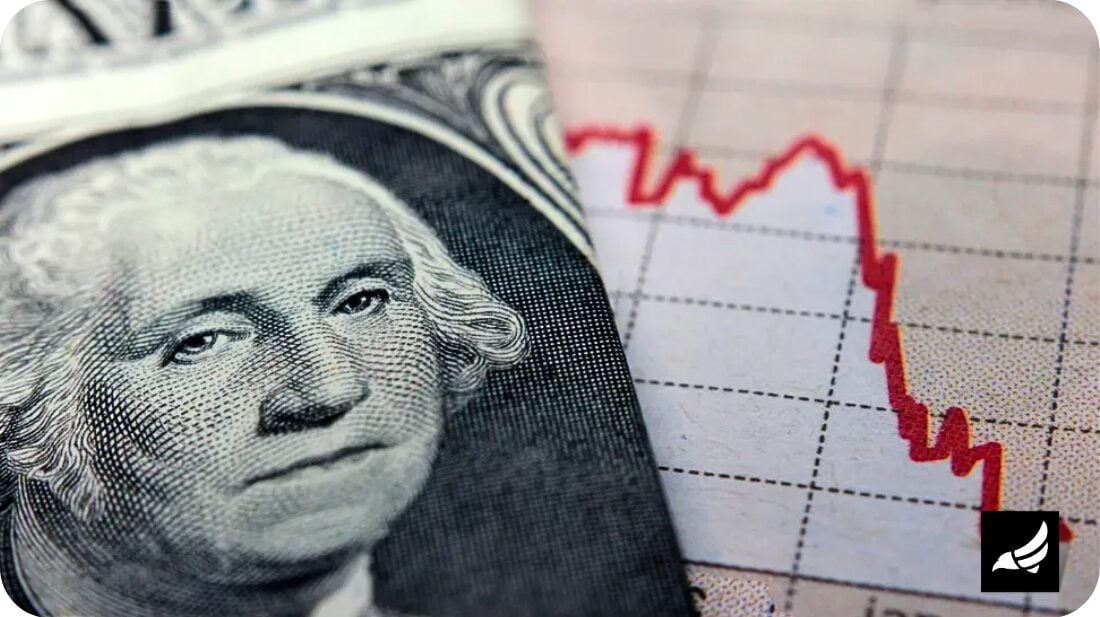
The U.S. dollar has experienced a dramatic 10.8% decline in the first half of 2025, marking its worst six-month performance since 1973, when the collapse of the Bretton Woods system and other global economic shocks led to a 15% drop.
The U.S. Dollar Index (DXY), which measures the dollar against a basket of six major currencies, including the euro, yen, and pound, fell to 96.38 by early July, its lowest level since February 2022.
This unprecedented slide has raised concerns about the greenback’s safe-haven status, driven by a combination of President Donald Trump’s economic policies, rising U.S. debt, and uncertainties surrounding Federal Reserve independence.
Here are the key drivers of the dollar’s decline according to experts.
- Trump’s Tariff Policies and Trade Uncertainty
President Trump’s aggressive tariff agenda, including levies on imports from major trading partners like Canada and Mexico, has sparked fears of global trade disruptions. Initially, analysts expected these policies to weaken foreign economies and bolster the dollar by driving U.S. inflation. However, the opposite has occurred, with the euro surging 13.8% against the dollar to $1.179, its strongest level since September 2021. The yen has also gained 9% year-to-date, its best performance since 2016. Investors are increasingly concerned about a potential U.S. economic slowdown, prompting a sell-off of dollar-denominated assets. - Rising U.S. National Debt
The Congressional Budget Office projects that Trump’s proposed “One Big Beautiful Bill Act,” which extends 2017 tax cuts and increases borrowing, will add $3.3 trillion to the U.S. national debt by 2034. With the debt-to-GDP ratio already at 124% in 2024, concerns about fiscal sustainability have driven investors away from U.S. Treasuries, further weakening the dollar. The 10-year Treasury yield dropped to 4.23% by July 1, 2025, reflecting investor caution amid rising debt levels. - Federal Reserve Independence Under Scrutiny
President Trump’s public criticism of Federal Reserve Chair Jerome Powell, including calls for aggressive rate cuts to as low as 1%, has raised fears about the central bank’s autonomy. On June 30, 2025, Trump reportedly sent Powell a handwritten note comparing U.S. interest rates to Japan’s 0.5% and Denmark’s 1.75%, intensifying market unease. Treasury Secretary Scott Bessent’s remarks suggesting the Fed is “frozen at the wheel” have further fueled speculation of a dovish shift in monetary policy, with markets pricing in 125 basis points of rate cuts over the next year. - Global Shift to Alternative Safe-Haven Assets
The dollar’s traditional role as a safe-haven currency has been undermined, with investors turning to assets like gold, which hit record highs above $3,330 per ounce, and European government bonds. The Stoxx 600 index, a broad measure of European stocks, rose 15% in the first half of 2025, yielding a 23% gain for U.S. investors when converted to dollars. This shift reflects growing confidence in non-U.S. markets, particularly in Europe, where defense and government spending plans are bolstering economic prospects.
Also Read: Economy News: US Retail Sales Now Plummet in Latest Trend
Economic and Market Implications
The dollar’s decline has far-reaching consequences.
For U.S. consumers, a weaker dollar increases the cost of imports and international travel, with summer travel expenses rising significantly.
However, it provides a boost to U.S. exporters, as American goods become more competitive globally.
Globally, the dollar’s slide has strengthened other currencies, with the British pound reaching a three-year high at $1.3737 and the euro eyeing $1.20.
This has raised concerns for other central banks, as stronger currencies could make their exports less competitive, potentially stifling growth.
Analysts at MUFG warn that renewed trade policy turmoil and a weakening U.S. labor market could drive further dollar depreciation into 2026.
Despite the dollar’s struggles, U.S. stock markets have shown resilience, with the S&P 500 gaining 10.57% in Q2 2025 after a 4.59% decline in Q1.
This recovery, driven by tech sector strength and optimism about artificial intelligence, suggests investors are hedging rather than fully abandoning U.S. markets.
Is De-Dollarization on the Horizon?
While some speculate about “de-dollarization,” analysts argue that the dollar’s role as the world’s reserve currency remains secure for now.
According to Investopedia, true de-dollarization would require a significant contraction of government or private balance sheets, which is unlikely in the near term.
However, Harvard economist Kenneth Rogoff notes that Trump’s policies, including trade wars and threats to foreign investment, are accelerating the dollar’s decline, potentially eroding its long-term dominance.
The dollar’s trajectory remains uncertain, with key events like the July 9 tariff deadline and ongoing debates over Trump’s tax bill looming.
Stronger-than-expected U.S. economic data, such as the ISM Manufacturing PMI and JOLTS job openings reports, provided a modest rebound in the DXY to 96.85 on July 1, but bearish sentiment persists.
Analysts like Harsh Gupta Madhusudan of Ionic Asset predict more cyclical dollar weakness in the coming years, though short-term stabilization is possible if trade negotiations progress or fiscal concerns ease.
Others, like Francesco Pesole of ING, describe the dollar as the “whipping boy” of Trump’s erratic policies, suggesting further declines unless significant reforms are implemented.
The U.S. dollar’s historic decline in the first half of 2025 reflects a confluence of policy uncertainties, fiscal challenges, and shifting global investor sentiment.
While the greenback retains its dominance, its safe-haven appeal is waning, prompting a reevaluation of its role in global markets.
As the U.S. navigates trade tensions and mounting debt, investors and policymakers alike will closely monitor the Federal Reserve’s next moves and the outcome of Trump’s legislative agenda.
For now, the dollar’s path remains downward, with profound implications for the global economy.
Also Read: AOC Now Slams Trump on $25K Cap Tip Deductions
Visit the Homepage ⬅️ for our extensive library of news, or read news for you below.
News For You