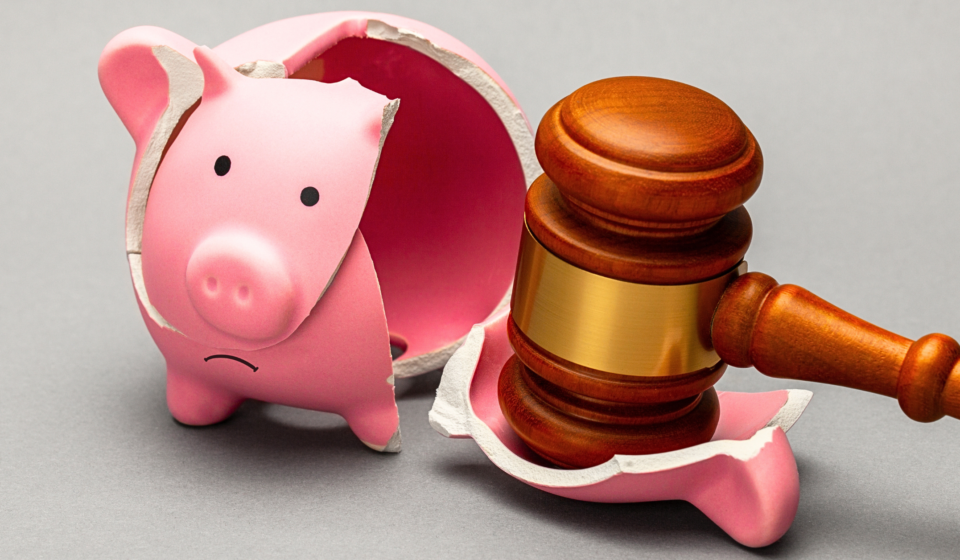
What happens when you file for bankruptcy? Filing for bankruptcy immediately changes how creditors can pursue you, but it does not mean that all of your debts simply disappear overnight.
For many people, bankruptcy begins with years of financial pressure: credit card balances that keep growing, medical bills, personal loans, missed mortgage payments, collection calls, or the threat of having a vehicle or home taken away.
I remember growing up when my folks filed for bankruptcy; I was 13. All I knew during that time was that we were losing our home and they were going through a difficult time financially.
Once a bankruptcy petition is filed, federal bankruptcy law provides important protections. In most cases, an automatic stay takes effect, temporarily stopping creditors from pursuing many collection actions.
When an individual files a bankruptcy petition with the federal bankruptcy court, the case officially begins.
One of the most immediate consequences is the automatic stay.
The automatic stay generally stops creditors from continuing collection efforts, including certain lawsuits, wage garnishments, repossessions and foreclosure actions.
The protection begins when the bankruptcy case is filed, although there are exceptions and circumstances in which a creditor can ask the court for permission to continue an action.
The U.S. Courts explains that the automatic stay applies to most collection activity after a bankruptcy petition is filed.
This is one of the biggest reasons people seek bankruptcy protection in the first place.
Instead of dealing with creditors individually, the debtor’s financial situation moves into a federal court-supervised process.
The bankruptcy process begins with paperwork
Filing bankruptcy requires much more than submitting a simple application.
A debtor generally provides detailed information about income, expenses, property, debts, financial transactions and other aspects of their financial situation.
Individuals also generally must complete an approved credit counseling course within the 180 days before filing for bankruptcy, subject to limited exceptions.
That requirement exists because bankruptcy is a significant legal and financial decision.
Before filing, it is important to understand which debts may be discharged, which assets may be protected by exemptions and which type of bankruptcy makes sense for the individual’s circumstances.
What is the automatic stay?
The automatic stay is one of the most important protections that comes with filing bankruptcy.
In simple terms, it tells most creditors: stop collecting for now.
Depending on the circumstances, the automatic stay can stop or temporarily halt actions such as:
Debt collection calls
Collection lawsuits
Wage garnishments
Certain foreclosure proceedings
Certain repossession efforts
Some other attempts to collect debts
The stay is automatic in most bankruptcy cases and does not require a separate hearing to take effect.
However, it does not stop every possible legal or financial action.
Certain types of proceedings are excluded from the automatic stay, and creditors can sometimes ask the bankruptcy court to lift or modify the stay.
That is why someone facing foreclosure, eviction, child-support collection or another urgent legal matter should not assume that filing bankruptcy automatically solves every problem.
A bankruptcy trustee is assigned to the case
After a bankruptcy case is filed, a trustee is generally assigned to administer the case.
The trustee’s responsibilities depend on the chapter that was filed.
In a Chapter 7 case, the trustee reviews the debtor’s financial information and determines whether there are nonexempt assets that can be liquidated for the benefit of creditors.
That doesn’t necessarily mean someone filing Chapter 7 will lose their home, car or other belongings.
Bankruptcy law allows certain property to be protected through exemptions, but the exemptions available can depend on applicable state and federal law.
This is one of the most misunderstood aspects of bankruptcy.
Filing Chapter 7 does not automatically mean that everything you own gets taken.
What happens in Chapter 7 bankruptcy?
Chapter 7 is commonly known as liquidation bankruptcy.
The basic concept is that qualifying debts may be discharged while a trustee administers any nonexempt assets that are available for creditors.
Many Chapter 7 cases are considered “no-asset” cases because there may be no nonexempt property available for the trustee to liquidate.
For someone who qualifies, Chapter 7 can provide a relatively quick path toward a financial fresh start.
However, not everyone automatically qualifies.
Individual Chapter 7 cases can be subject to a means test, which looks at income and certain expenses to determine whether the debtor qualifies for Chapter 7 relief.
How long does Chapter 7 take?
A typical Chapter 7 case can move considerably faster than a Chapter 13 case.
The U.S. Courts notes that a meeting of creditors generally occurs between 21 and 40 days after a Chapter 7 petition is filed.
The exact timeline varies depending on the circumstances of the case.
If the case proceeds normally and there are no complications, a Chapter 7 bankruptcy may be completed within several months.
What happens in Chapter 13 bankruptcy?
Chapter 13 works differently.
Instead of liquidating assets under the Chapter 7 structure, Chapter 13 allows an individual with regular income to propose a court-approved repayment plan.
The plan generally lasts three to five years.
During that time, the debtor makes payments through the Chapter 13 trustee, who distributes funds to creditors according to the approved plan.
This can make Chapter 13 particularly useful for people who have income but need time to catch up on overdue obligations.
For example, Chapter 13 may allow someone to address mortgage arrears through a repayment plan while keeping their home, provided they meet the applicable requirements.
The U.S. Courts identifies the ability to keep property and repay debts over time as a central feature of Chapter 13.
Will bankruptcy erase all of your debt?
No.
This is another major misconception about bankruptcy.
A bankruptcy discharge releases a debtor from personal liability for certain qualifying debts. But not every debt is necessarily dischargeable.
The type of debt matters.
Certain obligations can receive different treatment under bankruptcy law, including some taxes, domestic support obligations and certain other debts.
A valid lien against property can also survive bankruptcy even when personal liability for the underlying debt has been discharged.
In other words, bankruptcy can eliminate your personal obligation to pay certain debts without necessarily eliminating every creditor’s rights against collateral.
That distinction can become particularly important with mortgages and auto loans.
Bankruptcy can have a significant effect on your credit history.
The bankruptcy itself can remain on a consumer credit report for up to 10 years, although the length of reporting can depend on the chapter involved.
The Consumer Financial Protection Bureau currently states that Chapter 7 bankruptcy can remain for up to 10 years, while Chapter 13 generally appears for up to seven years.
That does not mean your credit score will stay at its lowest point for the entire period.
Credit scores can change substantially over time as new information is added to a credit report.
After bankruptcy, rebuilding credit generally involves establishing a consistent record of responsible financial behavior and monitoring credit reports for errors.
The CFPB recommends regularly checking credit reports and disputing inaccurate information.
Can you get a credit card after bankruptcy?
Potentially, yes.
A bankruptcy does not necessarily prevent someone from obtaining credit forever.
However, access to credit immediately after bankruptcy may be more limited, and available credit may come with higher interest rates, lower limits or other less favorable terms.
Over time, responsible use of new credit can help establish a stronger payment history.
The important point is that bankruptcy is not necessarily the end of someone’s financial life.
For some people, it becomes the starting point for rebuilding.
Can you buy a house after filing bankruptcy?
Possibly.
Bankruptcy can make obtaining a mortgage more difficult, but it does not automatically prevent someone from buying a home in the future.
Lenders consider numerous factors, including credit history, income, debt, down payment and the type of mortgage being sought.
The waiting period after bankruptcy can also depend on the loan program and the circumstances surrounding the bankruptcy.
Someone considering bankruptcy who hopes to purchase a home later should therefore look at the decision as a long-term financial planning issue rather than simply focusing on what happens to their credit score immediately after filing.
The answer depends on whether the vehicle is financed, whether you are current on the loan, how much equity you have and which bankruptcy chapter you file.
If you have an auto loan, bankruptcy does not necessarily mean you get to keep the vehicle without continuing to deal with the underlying lien.
Chapter 13 can provide a structure for dealing with secured debts through a repayment plan, while Chapter 7 may involve reaffirmation or other treatment depending on the circumstances.
Because vehicle exemptions vary by state, someone with significant equity in a car should understand the applicable exemption rules before filing.
What happens to your house if you file bankruptcy?
Filing bankruptcy does not automatically mean that your home will be sold.
The outcome depends on factors including the bankruptcy chapter, the amount of equity in the property, applicable exemptions and whether you are current on the mortgage.
Chapter 13 can be particularly important for homeowners who need time to catch up on qualifying overdue mortgage payments.
However, bankruptcy does not simply erase a mortgage lien.
This is an area where individual circumstances matter enormously.
What debts are commonly discharged?
Bankruptcy can discharge certain types of unsecured debt.
Examples can include qualifying:
Credit card debt
Medical bills
Personal loans
Certain other unsecured obligations
But the treatment of individual debts can vary.
A bankruptcy discharge is a legal order that prevents creditors from pursuing collection of debts that were actually discharged.
Anyone considering bankruptcy should determine exactly which debts would be affected rather than assuming every balance will disappear.
What happens at the meeting of creditors?
One of the steps that can surprise first-time filers is the 341 meeting, commonly called the meeting of creditors.
This is not normally a traditional courtroom trial.
The trustee reviews information about the debtor’s financial situation and creditors may have an opportunity to ask questions.
For Chapter 7 cases, the U.S. Courts generally says the meeting occurs between 21 and 40 days after filing.
The exact timing and procedures can vary by jurisdiction and case.
Do you have to keep paying your bills after filing bankruptcy?
Filing bankruptcy does not mean you can stop paying every bill.
Some obligations continue.
For example, current expenses such as rent, utilities, insurance and other ongoing living expenses generally still need to be addressed.
Certain taxes and domestic support obligations may also receive special treatment under bankruptcy law.
Chapter 13 debtors, in particular, must make the payments required under their court-approved repayment plan.
Failing to meet the requirements of a bankruptcy case can create serious consequences, including dismissal.
What happens after bankruptcy is discharged?
If the case is successfully completed and eligible debts are discharged, creditors generally cannot continue attempting to collect discharged debts.
The U.S. Courts describes the discharge as a permanent order that prohibits creditors from taking collection action on debts covered by the discharge.
That’s the point at which many people begin rebuilding their financial lives.
The process can include:
Creating a realistic budget
Building an emergency fund
Paying new obligations on time
Monitoring credit reports
Avoiding unnecessary high-interest debt
Rebuilding a consistent payment history
Setting longer-term savings goals
Bankruptcy may stay on a credit report for years, but the financial decisions made after bankruptcy can still matter significantly.
How long does bankruptcy stay on your credit report?
This is one of the most common questions people ask.
According to the Consumer Financial Protection Bureau, bankruptcy information can remain on a credit report for up to 10 years.
More specifically, the CFPB states that Chapter 7 bankruptcy can remain for up to 10 years, while Chapter 13 bankruptcy can generally remain for seven years.
That distinction matters because people often hear the blanket statement that “bankruptcy stays on your credit for 10 years.”
The reality is more nuanced.
Is bankruptcy always the best option?
No.
Bankruptcy is a powerful legal tool, but it is not automatically the right answer for everyone.
Depending on the situation, alternatives may include:
Negotiating directly with creditors
Debt-management programs
Debt consolidation
Selling assets voluntarily
Adjusting expenses
Refinancing certain debts
Working with a qualified financial counselor
Negotiating medical debt
Exploring available government or nonprofit assistance
Bankruptcy can also have consequences involving property, credit and future borrowing.
For that reason, the decision should be based on the person’s complete financial picture rather than simply how much debt they owe.
Frequently asked questions
Does filing bankruptcy stop collection calls?
Generally, yes. The automatic stay usually stops most collection activity once the bankruptcy petition is filed. However, there are exceptions, and creditors can sometimes ask the court to lift the stay.
Does bankruptcy erase credit card debt?
Qualifying credit card debt can generally be discharged in bankruptcy, but exceptions can apply depending on the circumstances.
Can bankruptcy stop wage garnishment?
The automatic stay generally stops many wage garnishments after a bankruptcy petition is filed, although exceptions can apply.
Will I lose my house if I file bankruptcy?
Not necessarily. Whether you can keep your home depends on factors such as the bankruptcy chapter, home equity, mortgage status and applicable exemptions.
How long does bankruptcy take?
Chapter 7 generally takes substantially less time than Chapter 13. Chapter 13 repayment plans usually last three to five years.
Can bankruptcy be removed from my credit report early?
Accurate bankruptcy information generally cannot simply be removed because someone wants it gone. Bankruptcy information can remain on a credit report for years under federal credit-reporting rules.
Can I rebuild my credit after bankruptcy?
Yes. Bankruptcy can create a significant setback, but responsible financial behavior afterward can help rebuild credit over time.
The bottom line
So, what happens when you file for bankruptcy?
The first major change is the automatic stay, which generally puts a stop to most creditor collection activity.
From there, the case moves through the federal bankruptcy system, where a trustee reviews the debtor’s financial situation and the court determines how the case proceeds.
Chapter 7 generally focuses on liquidation and discharge of qualifying debts, while Chapter 13 allows eligible individuals with regular income to repay debts through a court-approved plan over three to five years.
Bankruptcy can provide something that people struggling with overwhelming debt desperately need: time and protection from creditors while they work through a legal process designed to provide financial relief.
But it is not a financial reset button.
Some debts may survive. Certain property may be at risk. Credit can be affected for years. And the decision to file can have consequences that extend well beyond the day the petition is submitted.
For anyone considering bankruptcy, understanding those consequences before filing may be just as important as understanding the relief bankruptcy can provide.
But I’m curious to know what you think. Leave your thoughts below.
Enjoy FrankNez? ⭐ Add FrankNez as a Preferred Source on Google to see more of our coverage in Google Search.
This article is for informational purposes only and is not legal or financial advice. Bankruptcy laws and exemptions can vary depending on individual circumstances and jurisdiction. Anyone considering bankruptcy should consult a qualified bankruptcy attorney or other appropriate professional.
Frank Nez is an American entrepreneur, journalist, writer, and investor. Frank's work has been cited by SEC and Congressional reports. Franknez.com is a personal finance and market news publication, dedicated to publishing content on money, investing, entrepreneurship, and retail investor news.